
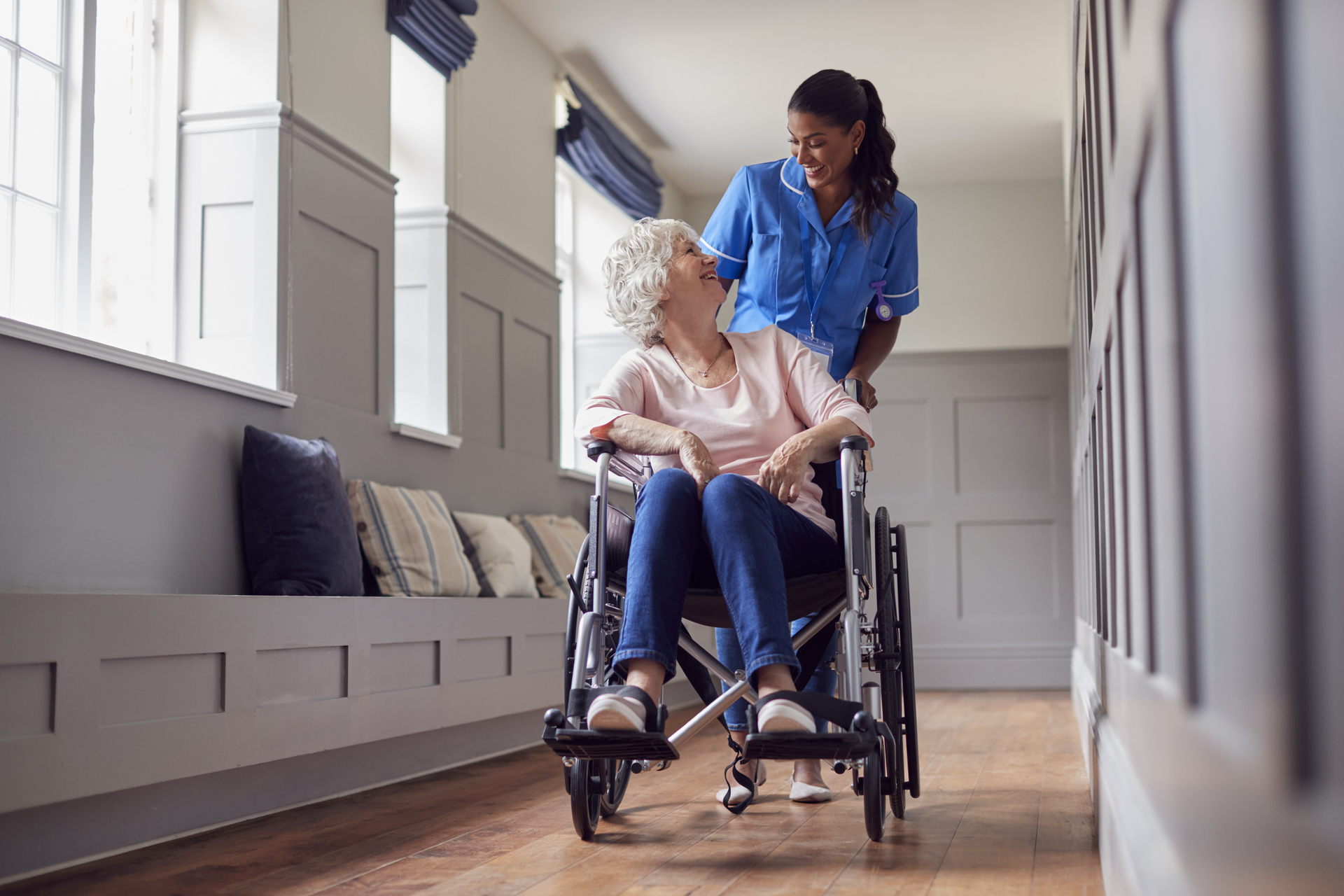
When an aging parent has a fall, families often move quickly from immediate concern to bigger questions about what it means for their health, independence, and day-to-day safety.
A single fall does not automatically mean an older adult needs to move, but it can reveal changes in balance, mobility, medication needs, or daily functioning that were less obvious before. Looking at the circumstances surrounding the fall, how your parent recovers, and how well they manage daily routines can help you decide what kind of support makes sense next.
Assisted living after a fall should become a serious consideration when recovery shows that your parent now needs more consistent support with daily life.
Essential Steps After a Fall
When a fall occurs, the first priority is your loved one’s condition and whether they need medical attention.
A medical evaluation is important if your parent has severe pain, a possible head injury, difficulty moving, or worsening symptoms. Serious injuries, including broken bones or internal bleeding, may not always be obvious right away.
It is also useful to assess the circumstances surrounding the fall. Where did it happen? What was your parent doing beforehand? Did they feel dizzy, weak, or unsteady? These details can help healthcare professionals understand what may have contributed.
The days afterward matter too. A parent who moved independently before may suddenly need help standing, walking, bathing, or dressing. Those changes can indicate that their recovery will require more support than expected.
What May Have Increased Their Fall Risk
Several changes may have increased your parent’s fall risk, including balance problems, reduced strength, or changes in mobility. Certain medications or medication side effects may also affect alertness or steadiness, making a medication review worth discussing with a healthcare professional.
The home environment matters as well. Poor lighting, difficult walking areas, loose rugs, or other environmental hazards can increase the risk of falling. Depending on your parent’s needs, practical changes such as improving lighting or installing grab bars may make certain areas easier to navigate.
Not every fall is preventable, but understanding the risk factors behind the fall can help families make practical changes and reduce future risks.
Fall Recovery Should Reflect Your Parent’s Current Abilities
Fall recovery is different for every person. Some older adults return to their usual routines quickly. Others may need extra help with mobility or personal care while they recover. Focus on how your parent is managing now and whether their current abilities have changed since the fall.
Recovery after a fall can affect mobility, confidence, and how comfortably someone manages everyday routines. Some older adults may become hesitant about walking or doing things they previously handled without much thought.
Appropriate assistance can help rebuild confidence, while physical therapy may support strength and balance during recovery.
At Magnolias of Walterboro, our team can help with mobility, bathing, dressing, grooming, meals, and medication management based on what each resident needs. Physical, occupational, and speech therapy may also be available through visiting providers when appropriate.
Fall Prevention Starts With What Has Changed
Families often want to know what will prevent future falls, but there is rarely one simple answer. Fall prevention works best when it addresses the specific factors affecting your parent, such as changes in mobility, medication, or the home environment.
The most useful starting point is to look at what has changed since the fall. Does your parent now need help walking? Has medication management become more difficult? Are certain areas of the home harder to use safely?
If those changes mean your parent needs more support throughout the day, the living environment becomes part of the conversation too. At Magnolias of Walterboro, resident rooms include emergency call systems, and we provide 24-hour onsite nursing support. Our community also has secure and alarmed entry points and a fenced garden. These features support resident safety, but they work best alongside individualized care. We pay attention to changes in residents’ abilities and routines so support can be adjusted when needed.
The purpose of fall prevention is not to restrict daily life. It is to create safe environments where older adults can continue doing as much as possible with appropriate assistance nearby.
Care Plans Can Address Future Risks
A fall may change what someone needs from one day to the next, which is why flexible care plans matter.
Every resident at Magnolias of Walterboro has an individual plan of care that reflects their daily routines and current needs. That plan can be revisited when circumstances change.
After a fall, healthcare professionals may also help families assess whether new limitations are temporary or whether additional support is likely to be needed for longer. That input can be particularly useful when an injury affects mobility or activities of daily living.
As your parent’s needs become clearer, their care plan can be adjusted to reflect the level of support they now require and help address future risks.
Is Your Parent at Higher Risk Living Alone?
After a loved one’s fall, everyday routines can look different. Tasks such as showering, moving between rooms, or managing medication may carry a higher risk of injury if balance or mobility has changed. This does not mean every parent who falls needs assisted living, but it does mean families should take a closer look at whether the current level of support is still enough.
Consider whether your parent can get help when they need it and whether that help is consistently available. If family members are providing most of the assistance, think about whether that arrangement remains realistic as care needs increase.
This is a good point to reassess whether your parent now needs more consistent support with daily life.
When Assisted Living After a Fall May Make Sense
For some older adults, assisted living after a fall becomes worth considering when recovery or changing abilities make daily life harder to manage alone.
At Magnolias of Walterboro, we support residents who value their independence but need help with parts of everyday life. Assistance can cover everyday needs like personal care, meals, and household tasks, depending on the resident.
Residents also have access to in-house, on-call medical providers, in addition to the 24-hour onsite support described above. Families remain involved in their loved one’s care, and support can change as residents’ needs change.
For families who are not ready to make a permanent decision, respite care may also be useful after a hospital stay or other change in health.
What to Look for in Assisted Living Facilities After a Fall
When comparing assisted living facilities, look closely at how a community responds when a resident’s needs change. Ask how care is personalized, how care plans are updated, and what support is available if mobility or personal care needs increase.
At Magnolias of Walterboro, we take a family-centered approach. We get to know residents individually, and families can expect clear communication whenever support needs to change.
That flexibility can be particularly important after a fall, when care needs may continue to change during recovery.
Moving Forward After Fall-Related Injuries
A fall can reveal important changes in an aging parent’s health and everyday abilities. The most useful next step is to look at what happened, how well your parent is recovering, whether their fall risk has changed, and how much assistance they now need.
Those answers can help your family decide whether additional help at home is enough or whether assisted living after a fall should be part of the conversation.
At Magnolias of Walterboro, we provide personalized assisted living and respite care built around each resident’s individual needs. If your family is considering additional support after a fall, contact our team to learn more or schedule a tour of our community.
Frequently Asked Questions
Can my parent stay at Magnolias of Walterboro temporarily after a fall?
Yes. We offer Respite Care for a weekend, a week, a month, or potentially longer, depending on availability. A short-term stay may be helpful after a hospital stay when managing care at home is not yet practical.
Does Magnolias provide transportation to follow-up medical appointments?
Yes. We provide scheduled transportation to physician appointments, which can be useful for follow-up care after fall injuries or other health changes.
How does Magnolias of Walterboro respond if a resident falls?
Our team stays attentive to changes in a resident’s comfort, mobility, abilities, and overall well-being. If additional support is needed, the care plan can be revisited, and families are kept informed when concerns arise or adjustments may be appropriate.
Can Magnolias of Walterboro help prevent falls for residents at risk?
Not every fall is preventable, so we can’t promise to prevent falls entirely. What our team can do is focus on staff training and consistent attention to each resident’s routines and environment, which helps reduce fall-related injuries and supports resident safety over time.
Is Magnolias of Walterboro regulated by the state or federal government?
Assisted living communities in South Carolina are licensed and regulated by the South Carolina Department of Public Health as Community Residential Care Facilities. They are inspected for compliance with state licensing standards, including requirements related to resident care and safety.